How to Restore Proper Oil Pressure in a Diesel Engine ?
Abstract: The lubrication system is one of the two major mechanisms and five major systems of a diesel engine and is a necessary condition for maintaining its normal operation. The primary task of the lubrication system is to form a continuous oil film of a certain thickness between the various friction pairs of the diesel engine to prevent or reduce wear on components, while also performing partial functions such as cooling, rust prevention, and cleaning. This paper successfully resolved the issue of low oil pressure through analysis, improvement, and comparative testing.
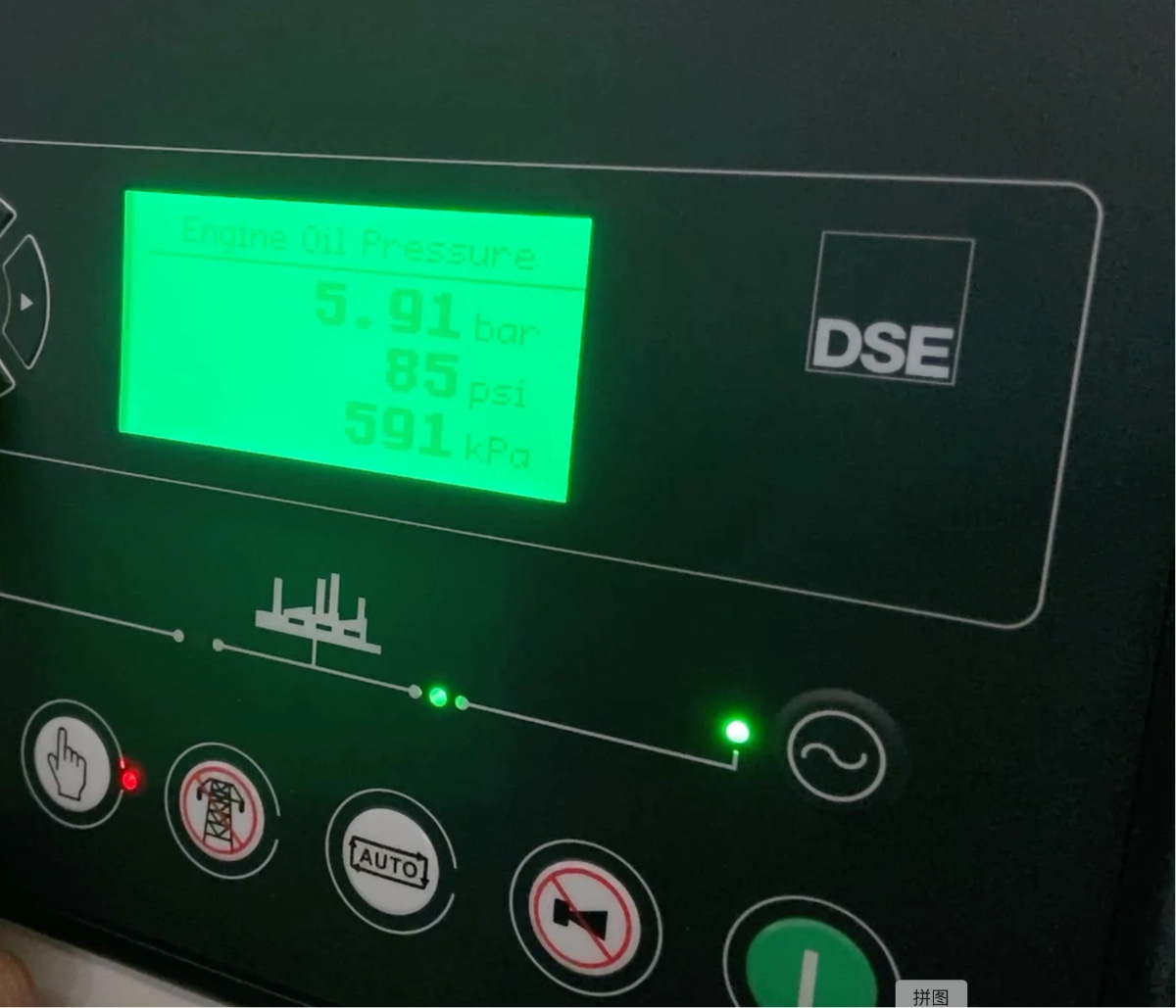
I. Cause Analysis
For a certain model of diesel engine operating at its rated speed of 1500 r/min and an oil temperature around 100°C, the oil pressure should not be lower than 0.35 MPa. Some users require it to be controlled above 0.4 MPa. Currently, the oil pressure for some engines of this model is approximately 0.35–0.37 MPa. Oil pressure generally drops to 0.30–0.35 MPa due to faults, which no longer meets user requirements.
The issue of low oil pressure in the main oil gallery of a diesel engine can be analyzed from two perspectives: reducing outflow (throttling) and increasing supply (opening the source). Throttling refers to reducing unnecessary oil leakage from the galleries; opening the source refers to increasing the oil supply to the galleries.
1. Throttling Issues
(1) Excessive Clearance in Friction Pairs
The clearances for each friction pair have specified limits during the design phase. When the clearance of a friction pair is relatively small, tending towards the lower limit, oil leakage is minimal, which is conducive to pressure buildup. When the clearance tends towards the upper limit, oil leakage increases, which is detrimental to pressure buildup and can lead to low oil pressure.
(2) Oversized Piston Cooling Nozzle Orifice
The function of the piston cooling nozzle is to spray high-pressure oil from the main oil gallery into the piston cooling oil hole to remove heat and cool the piston. When the piston cooling nozzle orifice is oversized, it inevitably increases oil leakage, resulting in low oil pressure. The theoretical orifice diameter is φ2 mm, while on-site measurements of actual parts show φ2.3 ± 0.05 mm. Calculations indicate the orifice area increased by over 25%. Analysis using ANSYS for these two conditions yielded the following results:
① Design condition (tube inner diameter 4 mm, orifice inner diameter 2 mm, straight section length 3 mm, simulated oil pressure 0.4 MPa).
② Actual condition cooling nozzle (tube inner diameter 3.5 mm, orifice inner diameter 2.3 mm, straight section length 3 mm, simulated oil pressure 0.4 MPa), maximum piston speed 13.5 m/s.
The analysis shows that increasing the orifice inner diameter by 0.3 mm increases oil leakage by 42.11%, significantly impacting oil pressure.
2. Opening the Source Issues
(1) Insufficient Oil Pump Delivery
The function of the oil pump is to supply oil at a certain pressure and volume to lubricated surfaces. Therefore, it is crucial to accurately calculate the oil demand when selecting an oil pump. Additionally, factors such as changes in oil viscosity due to temperature rise and engine overload (110% rated load) must be considered. Thus, selecting an oil pump requires ensuring an adequate design margin.
It is important to note specifically that this model of diesel engine uses a gear-type oil pump. During initial production, low oil pressure also occurred. The issue was significantly improved later by increasing the oil pump margin and raising the engine speed.
(2) Excessive Pre-Pump Resistance
Pre-pump resistance is primarily caused by the oil suction screen and suction pipe. Due to the small flow area of the oil pipe and suction screen, oil flow is restricted during suction, reducing the total system oil supply and leading to low oil pressure. Increasing the suction pipe diameter and the flow area of the suction screen can effectively reduce pre-pump resistance.
3. Other Factors
Many factors can cause low oil pressure in diesel engines. Besides the reasons mentioned above, there are less common causes such as sand holes in the engine block, clogged oil filters, and stuck oil pressure relief valves. These can only be identified and resolved through a process of(one-by-one) analysis and elimination during inspection.
II. Improvement Measures and Effectiveness Verification
After identifying the factors causing low oil pressure in the diesel engine, we undertook the following work:
(1) Reduced the actual clearance between the main friction pairs.
(2) Reduced the piston cooling nozzle orifice diameter.
(3) Increased the suction pipe diameter.
(4) Increased the flow area of the suction screen.
Subsequently, we conducted comparative tests on two diesel engines to verify the improvements. The improved diesel engines maintained oil pressure above 0.45 MPa, significantly higher than the pre-improvement level of 0.35 MPa.

 IPv6 network supported
 English
 français
 русский
 español
 português
 العربية
 Türkçe
 ไทย
ไทย Tiếng Việt
 Indonesia
  Filipino