How AI Is Reshaping the Diesel Generator Set Industry: Opportunities, Risks & Global Outlook
How AI Is Reshaping the Diesel Generator Set Industry: Opportunities, Risks & Global Outlook
By ZTA Power Technical Team | Updated: July 2025 | Reading time: 7 min
|
⚡ QUICK ANSWER AI is a double-edged sword for the diesel generator set industry. On one side, the explosive growth of AI data centers has created unprecedented demand for backup generator sets — China’s diesel generator exports surged over 20% in volume and 28% in value in the first seven months of 2025 alone. On the other, AI-powered predictive maintenance, smart load management, and sustainability pressures are forcing the traditional genset to evolve from a “dumb engine” into an intelligent, connected power asset. The verdict? Diesel generator sets are not being replaced by AI — they are being reinvented by it. |
|
KEY TAKEAWAYS • AI data centers demand 99.995% uptime — diesel generator sets remain the mandatory backup power source per Tier IV and China A-grade standards. • Grid connection queues stretch up to 7 years, forcing hyperscalers to deploy on-site diesel generators and aeroderivative turbines as bridge power. • Large genset lead times hit 12–18 months for Caterpillar & Cummins, opening market share for cost-competitive Chinese manufacturers. • AI-enabled predictive maintenance can reduce unplanned genset downtime by up to 40% and cut O&M costs significantly. • Sustainability pressure is real — hybrid diesel-BESS systems, biodiesel compatibility, and EPA Tier 4 / EU Stage V compliance are now table stakes. |
|
1. The AI Boom: Why Data Centers Still Can’t Quit the Diesel Generator Set |
It is one of the great ironies of the digital age: the technology promising to revolutionize every industry on Earth still relies on a century-old machine — the diesel generator set — to keep its lights on. The reason is simple physics. Training large language models and running AI inference at scale requires enormous, continuous electrical load. A single hyperscale AI data center can draw 100 megawatts or more, and even a momentary power interruption can destroy hours of training progress and cause millions of dollars in losses.
This is why international standards are uncompromising. The Uptime Institute’s Tier IV certification mandates 99.995% uptime, and China’s A-grade data centers must maintain “2N” power redundancy — both of which legally require diesel generator backup. When the grid fails, the diesel generator set bridges the critical 10–15 second gap before the full backup system engages. No battery bank alone can currently match the power density, runtime reliability, and cost-per-kW of a diesel genset at scale. As grid connection queues stretch to seven years in major markets, data center developers from Northern Virginia to Texas are increasingly deploying on-site diesel generators as primary bridge power — not just backup.
|
2. The Upside: How AI Strengthens the Generator Set Market |
The numbers tell a striking story. In the first seven months of 2025, China exported 502,463 diesel generator sets — up over 20% year-on-year — with shipment value surging 28% to US$2.52 billion, according to China’s General Administration of Customs. This export boom is directly fueled by global AI infrastructure investment. Domestically priced at roughly 3 million yuan, Chinese-made generator sets sell for about 4 million yuan abroad, creating a significant margin premium that is reshaping the industry’s valuation model from domestic benchmarks to international pricing.
The supply side is equally favorable for emerging manufacturers. Leading brands like Caterpillar and Cummins face production bottlenecks, with delivery lead times for large-scale units stretching to 12–18 months or more. This vacuum has created a golden window for OEM partners — like ZTA Power, which collaborates directly with Cummins and Perkins engines paired with Stamford alternators — to capture market share with reliable, cost-competitive solutions delivered on shorter timelines. Beyond hardware demand, AI is also upgrading the generator set itself: IoT-enabled controllers now provide real-time fault alerts, while AI-driven predictive maintenance algorithms analyze vibration, temperature, and fuel consumption data to reduce unplanned downtime by up to 40% and extend engine lifespan significantly.
|
3. The Downside: Risks and Pressures AI Brings to the Genset Industry |
However, the AI era also intensifies existential challenges for the diesel generator set industry. The most obvious is environmental scrutiny. AI data centers are already under public fire for their carbon footprint; relying on diesel backup — or worse, diesel primary power — only amplifies that criticism. On-site fossil generation is typically less efficient than grid-scale power, and electricity from behind-the-meter gas plants can cost roughly US$175/MWh, about twice the average industrial rate. Regulators in Virginia and elsewhere are already debating loosening emission restrictions on diesel generators to accommodate data center demand — a short-term fix that stores long-term environmental debt.
Second, technology displacement risk is accelerating. Battery Energy Storage Systems (BESS) are improving rapidly in energy density and cost. While batteries cannot yet replace diesel generator sets for multi-day backup at hyperscale, hybrid diesel-BESS architectures — where the battery handles short fluctuations and the genset runs only at optimal load — are already reducing fuel consumption and runtime hours. Within a decade, fuel cells, small modular reactors (SMRs), and advanced storage could erode diesel’s dominance in certain segments. Manufacturers that fail to integrate smart controls, hybrid compatibility, and low-carbon fuel readiness into their generator sets will find themselves commoditized and marginalized.
|
4. AI’s Impact on Diesel Generator Sets: Pros vs. Cons at a Glance |
|
Dimension |
Positive Impact (Pros) |
Negative Impact (Cons) |
|
Market Demand |
AI data center boom drives massive backup genset orders; China exports +28% in value (2025) |
Long-term, SMRs & fuel cells may displace diesel in new data center builds |
|
Product Intelligence |
AI predictive maintenance cuts downtime ~40%; IoT remote monitoring adds value |
Requires heavy R&D investment; traditional manufacturers risk falling behind |
|
Supply Chain |
Western brand bottlenecks (12–18 mo. lead) open doors for Chinese OEMs |
Component shortages for engines & alternators affect all manufacturers |
|
Sustainability |
Push for biodiesel & hybrid diesel-BESS gensets creates new product lines |
Emission regulations (EPA Tier 4, EU Stage V) raise compliance costs |
|
Pricing & Margin |
Export premium: ~33% price uplift vs. domestic Chinese market |
Rising raw material & after-treatment (SCR, DPF) costs squeeze margins |
|
5. Real-World Case: ZTA Power’s Smart Generator Set Solutions |
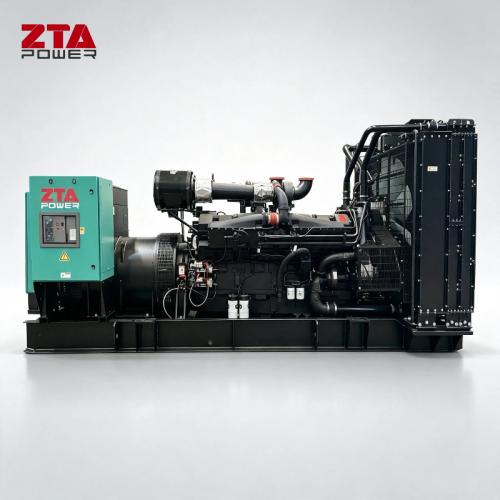
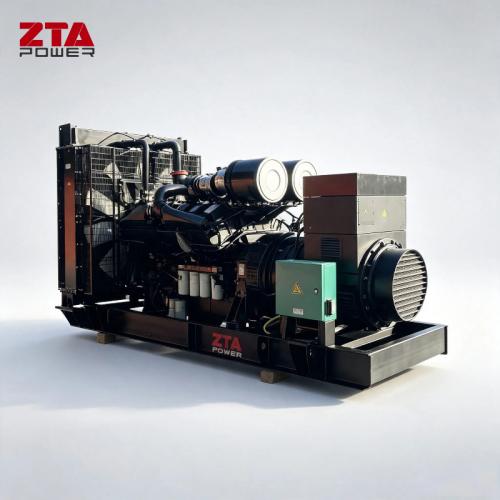
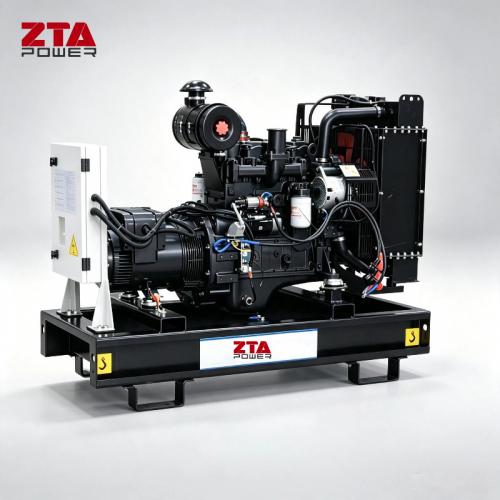
At ZTA Power, we are already living this AI-driven transformation. With over 17 years of manufacturing experience and OEM partnerships with Cummins, Perkins, Stamford, and Leroy Somer, we supply diesel generator sets ranging from 24 kW to 1,200 kW (30–1,500 kVA) to clients in over 200 countries. Our recent projects reflect the industry’s direction:
|
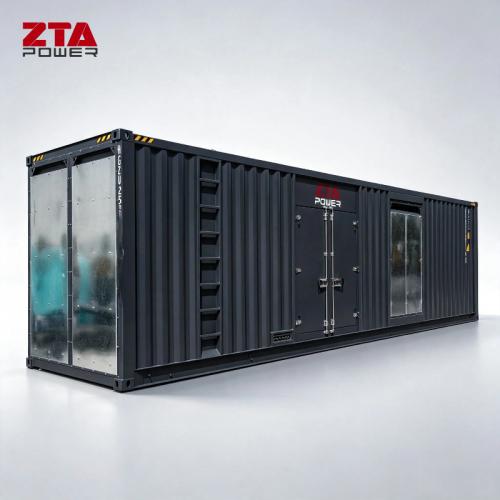
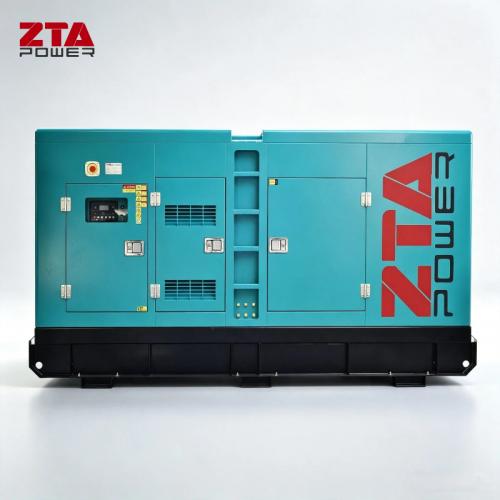
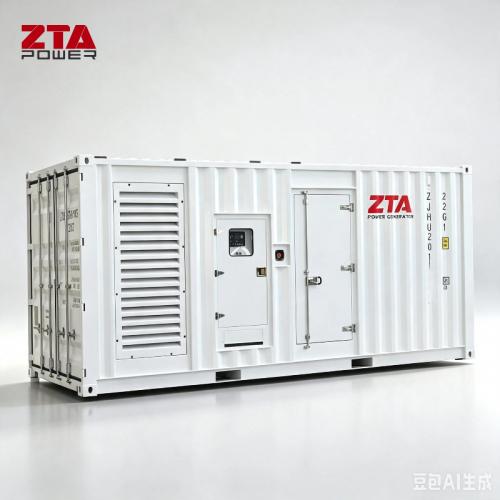
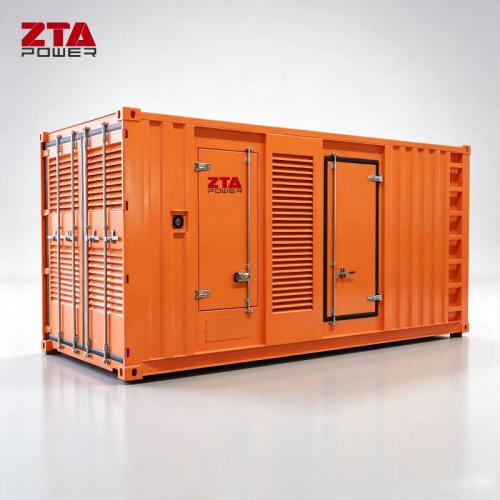
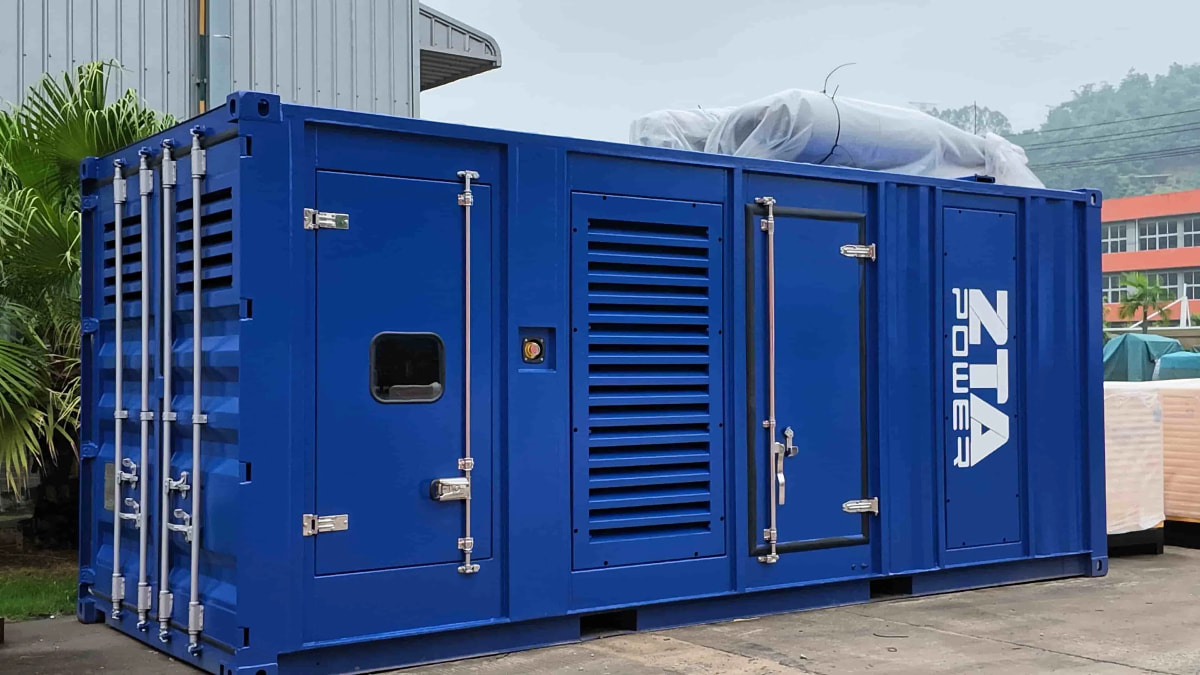
• Synchronized Multi-Genset Systems: We delivered 4 × 1,600 kVA Cummins diesel generator sets in parallel configuration for a media complex — the exact architecture AI data centers use for N+1 and 2N redundancy. • Containerized Solutions: Our 40HQ containerized Cummins 1,200 kW generator set provides transportable, soundproofed power ideal for remote data center deployments where permanent infrastructure isn’t ready. • IoT Remote Monitoring: Every ZTA generator set supports optional IoT-enabled controllers for real-time fault alerts — the foundational layer for AI-driven predictive maintenance. • ATS & Smart Transfer: Our Automatic Transfer Switch (ATS) panels ensure seamless grid-to-genset transition within seconds, meeting the critical 10–15 second window that Tier IV facilities demand. |
Our modular design and lean manufacturing approach delivers approximately 15% savings in total procurement costs — a meaningful advantage when data center operators are scaling up dozens of units simultaneously. With CE and ISO certifications, a 1-year / 1,000-hour warranty, and a production capacity of 200 units per month, ZTA Power is positioned to serve both traditional industrial backup and emerging AI infrastructure markets.
|
6. Frequently Asked Questions (FAQ) |
Q1: Will AI make diesel generator sets obsolete?
Not in the foreseeable future. While batteries and fuel cells are improving, diesel generator sets remain the only technology that can deliver reliable, high-power, multi-day backup at scale and competitive cost. AI is upgrading the genset — not replacing it. Tier IV and A-grade data center standards still legally mandate diesel backup.
Q2: How does AI improve diesel generator set performance?
AI enables predictive maintenance by analyzing sensor data (vibration, temperature, oil pressure, fuel consumption) to forecast failures before they occur. This can reduce unplanned downtime by up to 40%. AI also optimizes load sharing in synchronized multi-genset setups and improves fuel efficiency through smart load management.
Q3: Why are AI data centers using diesel generators as primary power?
Grid connection queues in major markets now stretch up to 7 years. Data center developers cannot wait — they deploy on-site diesel generators and gas turbines as bridge power to begin operations immediately while awaiting permanent grid connections.
Q4: What power range of generator sets does ZTA Power offer for data center applications?
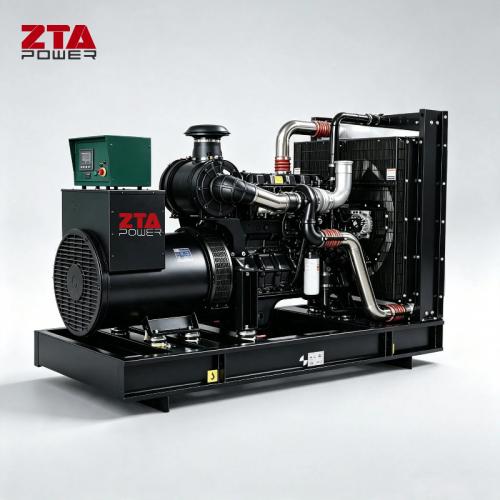
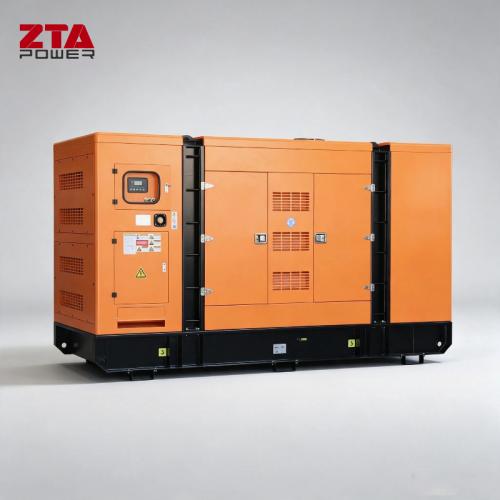
ZTA Power offers Cummins and Perkins diesel generator sets from 30 kVA to 1,500 kVA, with synchronized multi-unit configurations capable of delivering 6,400 kVA+ (e.g., 4 × 1,600 kVA parallel systems). Containerized, silent, and open-type formats are all available.
Q5: Are diesel generator sets compatible with green energy trends?
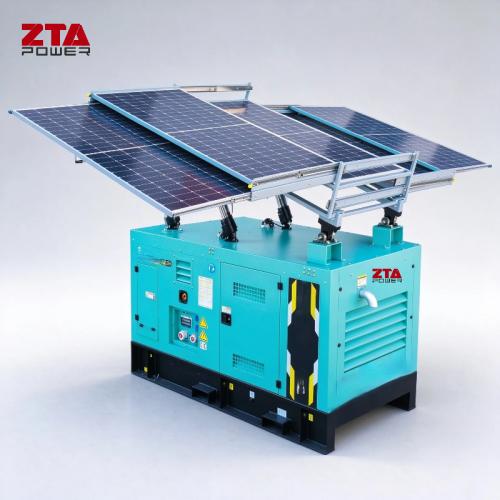
Yes. Modern generator sets support biodiesel blends, integrate with BESS hybrid systems, and comply with EPA Tier 4 and EU Stage V emission standards through SCR and DPF after-treatment. ZTA Power also offers solar-diesel hybrid solutions for off-grid applications.
|
7. The Outlook: Coexistence, Not Replacement |
Looking ahead to 2030, the relationship between AI and the diesel generator set will be defined by coexistence and intelligent evolution, not obsolescence. The International Energy Agency projects global electricity demand from data centers to double by 2026, driven largely by AI workloads. Every megawatt of AI computing power needs a reliable backup — and for the next decade at least, that backup will predominantly be diesel.
The winners in this transition will be manufacturers who embrace the dual mandate: deliver the bulletproof mechanical reliability that Cummins and Perkins engines guarantee, while layering on AI-powered intelligence — predictive maintenance, remote monitoring, hybrid-ready architectures, and low-carbon fuel compatibility. At ZTA Power, that is precisely the future we are building. The diesel generator set is not dying; it is getting smarter. And so are we.
|
Need a Reliable Generator Set for Your AI Infrastructure? ZTA Power delivers Cummins & Perkins diesel generators from 30–1,500 kVA, with ATS, synchronization, and IoT monitoring — shipped to 200+ countries. |
About ZTA Power: Xiamen ZTA Power System Co., Ltd. is a leading Chinese manufacturer of diesel generator sets, silent generators, containerized power solutions, ATS panels, and Stamford AVR accessories. With 17+ years of experience, CE/ISO certifications, and OEM partnerships with Cummins, Perkins, Stamford, and Leroy Somer, we serve clients in 200+ countries. Production capacity: 200 units/month. Warranty: 1 year / 1,000 hours.

 IPv6 network supported
 English
 français
 русский
 español
 português
 العربية
 Türkçe
 ไทย
ไทย Tiếng Việt
 Indonesia
  Filipino