Why a High Voltage Diesel Generator Set Is the Smart Choice for Industrial Power
A HIGH VOLTAGE DIESEL GENERATOR SET operates at output voltages of 6.6 kV, 10 kV, 10.5 kV, 11 kV — and in specialized models, up to 13.8 kV. This is fundamentally different from standard low-voltage units, which output 400V (3-phase) or 480V for North American markets. The higher voltage translates directly into lower current for the same power delivery (P = I²R), which means reduced line losses and dramatically thinner, lighter cabling over long distances. For any facility transmitting power beyond 500 meters, the engineering case for high voltage is compelling — and the economics are even stronger.
The HIGH VOLTAGE DIESEL GENERATOR SET isn't a niche product — it's purpose-built for sectors where power scale and transmission distance matter. Data centers running MW-scale UPS systems benefit from direct 10 kV integration, eliminating multi-stage voltage conversion losses. Mines and oil fields need power delivered to drilling rigs and extraction equipment across sprawling sites — low-voltage cables over those distances are impractical and costly. Large factories with existing 10 kV on-site grids connect directly, no step-down transformers required. Even offshore platforms and ships increasingly specify 6.6 kV gensets, because high voltage saves both space and cable weight in confined installations. Across all these scenarios, one principle holds: higher voltage means more efficient power transfer.
Choosing between a HIGH VOLTAGE DIESEL GENERATOR SET and a conventional low-voltage unit isn't just about voltage — it's about the total cost and complexity of your power infrastructure. Below is how the two approaches differ across the parameters that matter most to project engineers and procurement managers:
| Parameter | High Voltage Genset | Low Voltage Genset |
|---|---|---|
| Typical Voltage | 6.6–13.8 kV | 400V / 480V |
| Single-Unit Capacity | 2,000–5,000+ kVA | 50–2,500 kVA |
| Transmission Distance | >500 m (low loss) | <200 m (thick cables) |
| Cable Cost | 30–50% lower | Higher |
| Grid Integration | Direct to 10 kV grid | Requires step-up transformer |
| Maintenance | Certified HV expertise | Standard technician |
Behind every reliable HIGH VOLTAGE DIESEL GENERATOR SET are engineering decisions that directly affect uptime and safety. Insulation class is critical — H-grade (180°C) materials withstand the thermal and electrical stresses of high-voltage operation. AVR (Automatic Voltage Regulator) systems maintain output within ±1% tolerance, essential for sensitive industrial loads. Protection systems — overvoltage, short-circuit, differential, and neutral grounding resistors — are non-negotiable at these voltage levels. On the engine side, world-class platforms from Cummins, Perkins, MTU and leading Chinese manufacturers like Weichai and Yuchai provide the heavy-duty backbone, paired with high-voltage alternators from Stamford or Leroy-Somer. Smart control via SCADA / Modbus-TCP enables remote monitoring, automatic event logging, and seamless parallel synchronization — up to 32 units running in isochronous load-sharing mode.
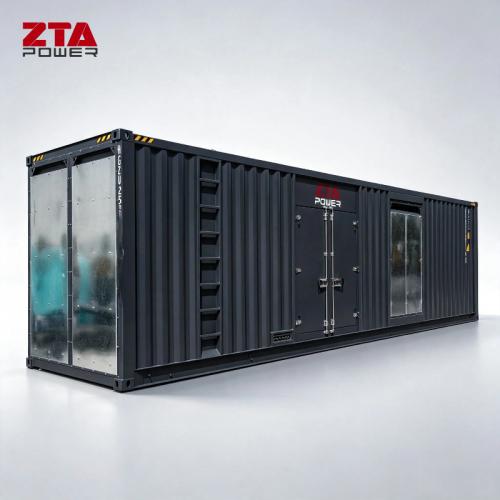
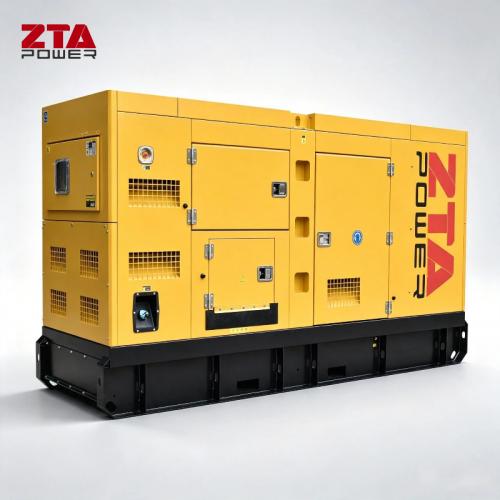
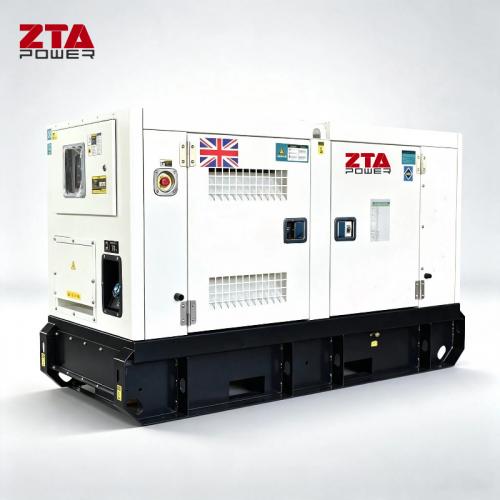
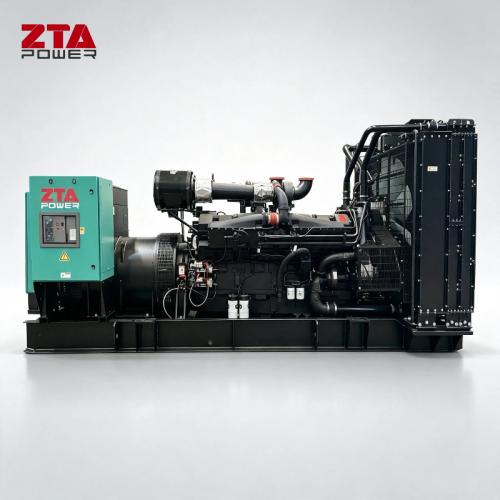
At ZTA Power, we deliver HIGH VOLTAGE DIESEL GENERATOR SET solutions from 1,200 kVA to 5,000+ kVA, covering 6.6 kV, 10.5 kV, and 11 kV output configurations. Our engineering team configures each unit to match your site conditions — from engine selection and alternator specification to enclosure design, step-up transformer integration, and ATS control panels. Whether your project is a data center requiring MW-scale standby, a mining operation needing long-distance power distribution, or an industrial facility connecting directly to a 10 kV grid, we provide the complete power package — engine, alternator, control, protection, and enclosure — with competitive lead times and global shipping support to over 200 countries.
With global demand for HIGH VOLTAGE DIESEL GENERATOR SET units rising sharply — driven by data center expansion, mining electrification, and grid reinforcement projects — lead times from Tier 1 engine manufacturers now stretch to 72–104 weeks. ZTA Power mitigates this by maintaining flexible production scheduling and offering Chinese engine alternatives with shorter delivery cycles. The practical advice is clear: initiate procurement 2–3 years ahead of commissioning, design your electrical infrastructure for future storage integration from day one, and partner with a supplier who understands both the engineering and the logistics of high-voltage power. Reliable power starts with reliable planning.
Need a HIGH VOLTAGE DIESEL GENERATOR SET for your next project?
Get a fast, detailed quotation tailored to your specifications. Our engineering team is ready.
Contact ZTA Power →

 IPv6 network supported
 English
 français
 русский
 español
 português
 العربية
 Türkçe
 ไทย
ไทย Tiếng Việt
 Indonesia
  Filipino