What Is The Operating Procedure for Diesel Generator Set Shutdown ?
Operating Procedure for Diesel Generator Set Shutdown
Abstract: The standard shutdown operating procedure for diesel generator sets described in this document is applicable to three types of generator sets: conventional intelligent control, stand-alone, and parallel. Please adjust the steps according to the specific equipment manual. The stand-alone version procedure complies with ISO 8528 standard requirements, with the execution deviation controlled within ±5%. For the shutdown operation of multiple parallel diesel generator sets, special attention must be paid to load balancing and system coordination; the professional operation procedure complies with IEEE 1547 standard. Additionally, for grid-connected generator sets, a synchronization disconnection procedure must be performed.
I. Conventional Intelligent Diesel Generator Shutdown Operation
1. Normal Generator Shutdown
(1) Before shutting down the generator set, the electrical load must be transferred to another power supply or disconnected. Then, open the output switch of the generator set to the "OFF" state. Allow the generator set to run without load for 5 minutes to ensure the engine components are well lubricated and cooled. Finally, turn the generator set controller knob to the "OFF" shutdown state.
(2) If the generator set cannot be shut down or is in an idle running state, it may be caused by improper installation or malfunction of the shutdown solenoid valve, or a controller fault. In this case, manually push the fuel injection pump's throttle to the minimum position or tap the shutdown solenoid valve body of the PT fuel pump to cut off the fuel supply. If the above measures still fail to stop the generator or if the controller malfunctions, temporarily shut down the generator by closing the oil pipe valve from the day tank to the diesel filter. After shutdown, a qualified professional engineer must be notified to inspect the generator set and troubleshoot the fault.
(3) When connecting or removing load cables, the generator must be turned off and the negative battery cable disconnected.
2. Emergency Generator Shutdown
(1) If any abnormal noise or odor occurs during generator start-up or operation, immediate shutdown is required.
(2) If the generator engine oil pressure suddenly drops to the limit or there is no oil pressure, and the fault indicator lights red, immediate shutdown is required.
(3) If the generator coolant temperature suddenly rises above the specified value and the fault indicator lights red, immediate shutdown is required.
(4) When the generator output voltage exceeds the maximum reading on the meter.
(5) In the event of fire, electric leakage, or other natural disasters that may endanger the generator set or operator safety.
(6) When any of the above situations occur, press the emergency stop button or quickly push the fuel injection pump stop control handle to the stop position. The generator set will quickly disconnect the load and immediately shut off the fuel supply.
(7) Do not perform an emergency shutdown arbitrarily during normal generator operation or when powering equipment unless there are special emergency circumstances.
3. Post-Shutdown Inspection
After the generator set is shut down, a comprehensive inspection of the generator set's cooling system, lubrication system, fuel system, intake system, exhaust system, starting system, and other systems must be carried out according to the pre-start inspection procedures to ensure the generator set is in a normal standby state. If the generator set requires automatic starting, set the controller start knob to the "AUTO" position.
4. Precautions
(1) Diesel generator sets must be operated by professional electricians. Unauthorized personnel or non-college electricians are not permitted to operate.
(2) Engine oil of CG grade or higher should be used; do not mix different brands or grades of oil.
(3) Generally, No. 0 diesel should be used; adjustments should be made in winter based on the ambient temperature of the generator room.
(4) Cooling water should be at least soft water; purified water or distilled water is recommended.
(5) The manuals, technical maintenance data, and special tools provided with the diesel generator set must be properly kept by the electrician and must not be lost.
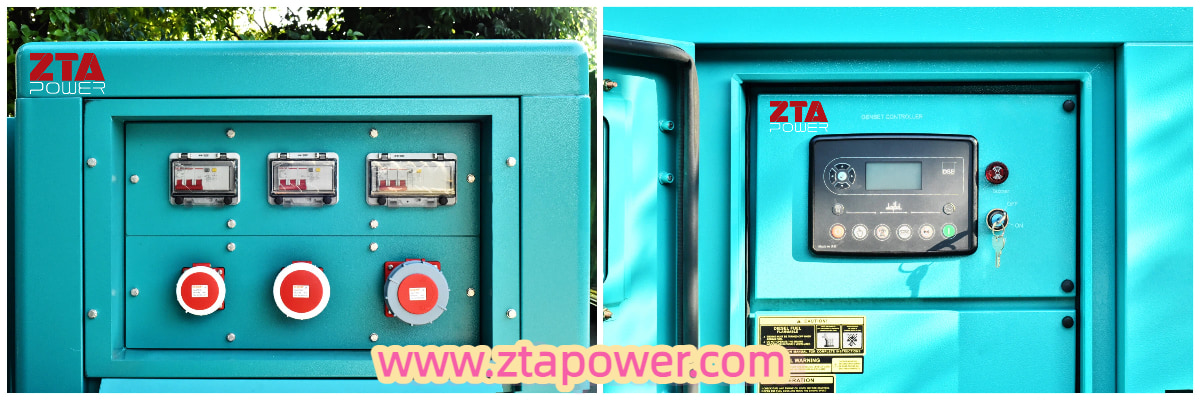
Figure 1 Schematic Diagram of Cummins Diesel Generator Set Controller Panel
II. Stand-Alone Diesel Generator Shutdown Procedure
1. Normal Shutdown Procedure
(1) Load Unloading Phase: Disconnect each load switch step by step (non-critical loads first, then critical loads). Open the generator output main circuit breaker. Maintain no-load operation for 3-5 minutes (extend to 8 minutes in high-temperature environments).
(2) Diesel Engine Shutdown Operation: Turn the control switch to the "STOP" position. Observe the tachometer returns to zero (for electronic control models, wait for the ECU to complete the shutdown self-check). Close the fuel cut-off valve (a critical step for mechanical models).
(3) Electrical System Shutdown: Disconnect the negative battery cable (mandatory for long-term shutdown). Turn off the main power switch of the control panel. Remove the electronic key (for intelligent generator sets).
2. Emergency Shutdown Procedure (For Abnormal Conditions Only)
(1) Trigger Conditions
① Overspeed (>115% rated speed);
② Engine oil pressure <0.15 MPa;
③ Coolant temperature >95°C sustained for 30 seconds;
④ Sudden electrical short circuit.
(2) Operating Steps
Immediately press the red emergency stop button. Cut off the fuel supply manual valve. Close all output switches.
3. Post-Shutdown Handling
(1) Routine Inspection: Check the oil sump level (5 minutes after shutdown). Test the coolant pH value (8.5-10.5). Record the cumulative operating hours.
(2) Maintenance Operations: Drain accumulated water from the fuel filter. Check the drive belt deflection (10-15 mm under 10 kg pressure). Clean the air filter (replace if differential pressure >6 kPa).
(3) Environmental Management: Open the crankcase ventilation valve. Drain condensate from the silencer (critical in winter). Remove combustible materials within a 1-meter radius.
4. Special Operating Conditions
(1) Low Temperature Environment (<5°C)
① Use an auxiliary heating device to maintain coolant temperature >20°C;
② Perform a 10-minute preheating start every 24 hours.
(2) High Humidity Environment
① Activate the generator space heater;
② Check insulation resistance (>2 MΩ).
(3) Long-Term Shutdown
① Perform a full discharge cycle (for lead-acid batteries);
② Add fuel stabilizer (ratio 1:1000);
③ Perform rust prevention treatment (on exposed metal surfaces).
5. Precautions
① Do not shut down under load (sudden load rejection rate should be <10%/second);
② The turbocharger needs to cool naturally to below 200°C;
③ The power-off interval for the electronic control system should be >30 seconds before restarting;
④ Do not open the radiator pressure cap within 2 hours after shutdown.
III. Parallel Diesel Generator Shutdown Procedure
1. Coordinated Shutdown Preparation
(1) Load Transfer Phase: Gradually reduce the total load to below 70% of the rated capacity of a single generator set. Activate the "pre-disconnection" mode of the load sharing device. Confirm the synchronizer phase difference is <±2°.
(2) System Disconnection Procedure
① Manual Mode: Adjust the governor of the generator set to be stopped to the "unload" position (speed droop difference 0.25-0.5 Hz). Open the parallel circuit breaker of the generator set (reverse power relay set to 5% of rated power). Observe the bus voltage fluctuation <±2%.
② Automatic Mode: Trigger the "sequential shutdown" command of the PMS (Power Management System). The system automatically executes load transfer (transfer rate ≤10 kW/s).
2. Step-by-Step Shutdown Procedure
(1) First Generator Set Shutdown: Perform the stand-alone unloading procedure (load rate must be reduced to below 30%). Disconnect the synchronizing check relay (maintain a 0.5-second delay for Type 25 relays). Turn off the parallel compensation function of the AVR (Automatic Voltage Regulator).
(2) Subsequent Generator Set Shutdown: Keep at least one generator set online until the load is completely unloaded.
(3) The last generator set to shut down must perform: Check the bus residual voltage <50 V. Disconnect the neutral point grounding switch (keep connected for IT systems). Reset all protection relays (clear IDMT curve records).
3. Special Operations for Parallel Systems
(1) Control Module Handling
Before cutting off power to the Load Balancing Controller (LBC), the following must be completed:
① Save the dynamic current sharing coefficients;
② Disconnect the CAN bus communication interface;
③ Record the cumulative imbalance of each generator set (should be <5%).
(2) Protection Device Reset
① Check the status of the circulating current suppressor (residual circulating current <2 A);
② Reset the reverse power relay (Type 63 requires manual reset);
③ Calibrate the synchronizing lockout device (re-set angular difference threshold to ±15°).
4. Emergency Shutdown Strategy
(1) Total System Emergency Stop
① Trigger the main bus tie breaker tripping (operating time ≤80 ms);
② Simultaneously activate the emergency fuel shut-off valves for all generator sets;
③ Activate the dynamic braking resistor (to absorb residual energy from generator sets).
(2) Selective Emergency Stop
① Faulty Generator Set Identification (locate using differential protection 87G);
② Execute selective disconnection (keep healthy generator sets running);
③ When isolating the faulty generator set, disconnect the generator circuit breaker first, then disconnect the bus side disconnecting switch.
5. Post-Shutdown Specialized Maintenance
(1) Parallel System Inspection
① Measure the busbar connector contact resistance (should be <50 μΩ);
② Check the synchronizing detection circuit (allowable phase error ±0.5°);
③ Calibrate the power transducer (accuracy must be maintained at 0.5 class).
(2) Control Bus Maintenance
① Clean the parallel controller connectors (contact impedance <0.1 Ω);
② Update the generator set characteristic parameter library (including droop characteristic curves);
③ Test the redundant communication channels (primary/secondary switchover time <200 ms).
(3) Precautions
① Parallel system shutdown must follow the principle of "disconnect first, then stop";
② The last generator set to shut down must handle the discharge task for the system's reactive power compensation devices;
③ After shutdown, check the temperature of the power sharing cables (temperature difference from ambient should be ≤15 K);
④ Before reconfiguring the parallel system, a new characteristic matching test is required.
(4) Special Condition Supplement
① Grid-connected System Shutdown: First disconnect the synchronization Phase-Locked Loop (PLL) from the utility grid;
② Black Start Configuration: Keep at least one generator set in hot standby state (maintain oil temperature at 40°C);
③ Multi-Fuel System: After shutdown, purge any residual gas from the dual-fuel mixing chamber.
Summary:
For stand-alone diesel generator sets, it is recommended to fill out the "Generator Set Status Record Sheet" after each shutdown, focusing on recording data such as the oil temperature/coolant temperature difference at shutdown, turbocharger axial clearance, and battery specific gravity (should be maintained at 1.28±0.01). For parallel diesel generator sets, it is recommended to use a dedicated parallel system analyzer to record key parameters during the shutdown process, including the rate of change of power angle difference between generator sets (should be <1°/s), instantaneous circulating current peak (should be below 10% of rated current), and load transfer dynamic response time (from command initiation to completion should be <2s). This procedure is applicable to parallel diesel generator set systems with a capacity ratio not exceeding 3:1. For systems with larger capacity differences, a virtual master control coordination strategy needs to be added.

 IPv6 network supported
 English
 français
 русский
 español
 português
 العربية
 Türkçe
 ไทย
ไทย Tiếng Việt
 Indonesia
  Filipino