What Diesel Engine Coolant Temperature Control Range and Effect ?
Abstract: The engine coolant temperature control of a diesel generator is a key factor in ensuring its efficient and stable operation. Typically, during operation, the coolant temperature needs to be maintained within the range of 80°C to 95°C. The actual temperature range should be based on the equipment manufacturer's manual, as slight differences may exist between different models. Cummins Inc. provides in this document the normal temperature range, the consequences of excessively high and low temperatures, and maintenance recommendations. Regular inspections must be carried out and implemented in actual operation to ensure the cooling system works effectively while avoiding overheating or overcooling issues.
I. Coolant Temperature Control Range
The specific values for the normal range of diesel engine coolant temperature may vary slightly depending on the engine model, design, and cooling system configuration. The key descriptions are as follows:
1. Normal Temperature Range
(1) Ideal Operating Temperature: 80°C – 95°C. Within this range, the diesel engine achieves the highest thermal efficiency, complete combustion, minimal mechanical wear, and optimal emissions.
(2) Design Basis: The cooling system controls the large/small circulation loop via the thermostat to maintain stable coolant temperature.
(3) Allowable Fluctuation Range: Brief deviations outside the range (e.g., ±5°C) are permitted during sudden load changes or ambient temperature variations, but must recover quickly. Some high-performance or turbocharged diesel engines may allow slightly higher temperatures (e.g., 85°C – 100°C); the equipment manual should be consulted.
2. Critical Values for Temperature Abnormalities
(1) High-Temperature Warning: ≥100°C will trigger an alarm or protective shutdown. Sustained high temperatures may lead to failures such as cylinder scoring or head gasket damage.
(2) Limit Value: The design upper limit for some models is 105°C (e.g., in closed pressurized cooling systems).
(3) Low-Temperature Risk: When <60°C, prolonged low-temperature operation can easily lead to incomplete combustion, carbon buildup, low-temperature corrosion, and other issues.
3. Key Factors in Temperature Control
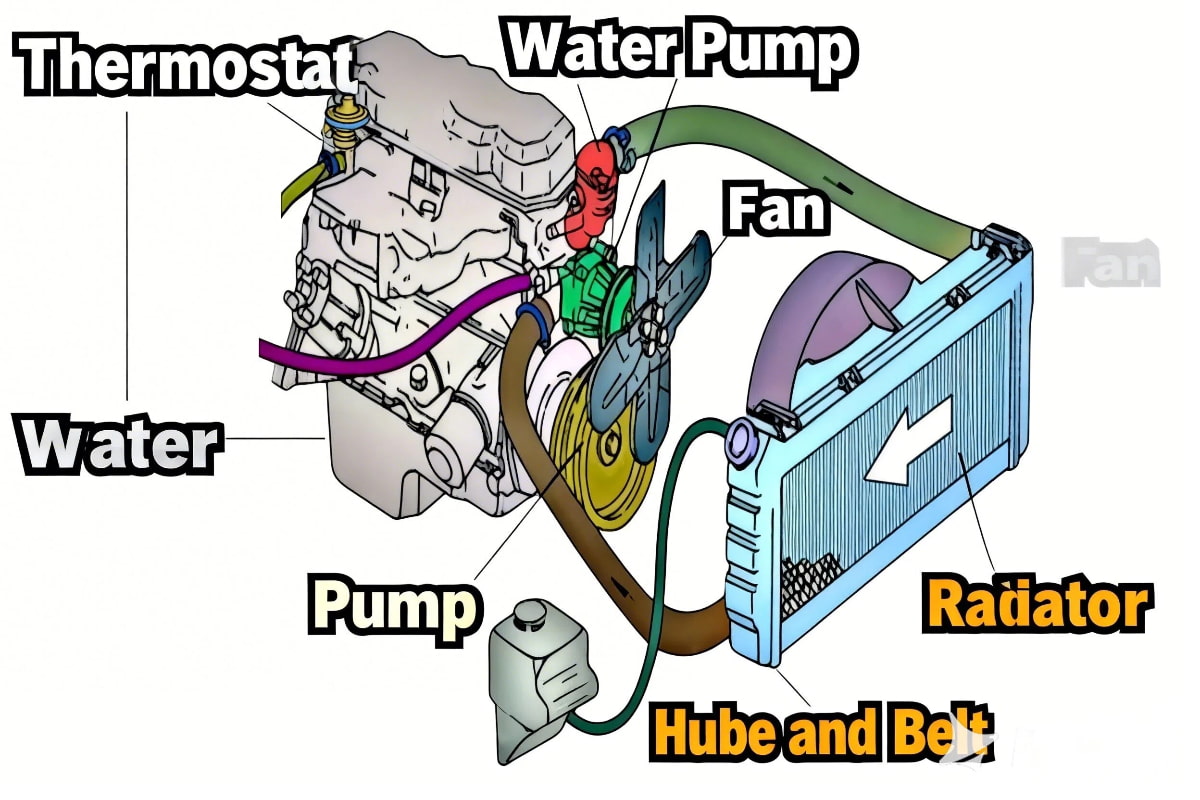
(1) Cooling System Components: The thermostat controls the coolant circulation path (small loop for rapid warm-up, large loop for enhanced heat dissipation); the water pump, radiator, and fan ensure coolant flow efficiency and heat dissipation capability.
(2) Environment and Operating Conditions: Enhanced heat dissipation is needed in high-temperature environments or during overload operation. Preheating is required in cold environments, and low-load operation should be avoided.
II. Effects of Excessively High or Low Coolant Temperature
1. Effects of Excessively High Coolant Temperature
(1) Mechanical Damage
① Component Expansion: Reduced clearance between the piston and cylinder liner, leading to cylinder scoring or seizure.
② Lubrication Failure: High-temperature oxidation of engine oil, oil film breakdown, exacerbating bearing and crankshaft wear.
③ Seal Damage: High-temperature deformation of the cylinder head gasket, causing coolant to leak into the combustion chamber (gasket failure).
(2) Performance Degradation
① Increased Risk of Knocking: Localized overheating in the combustion chamber causes abnormal combustion, reducing output power.
② Cooling System Overpressure: Radiator boiling over, hose rupture, coolant loss worsening overheating.
(3) Emission Deterioration: Increased generation of nitrogen oxides (NOx), failing to meet environmental standards.
2. Effects of Excessively Low Coolant Temperature
(1) Reduced Combustion Efficiency
① Poor Fuel Atomization: Incomplete combustion, increased carbon buildup, higher fuel consumption.
② Increased Heat Loss: Thermal energy dissipated through the cooling system, reducing thermal efficiency.
(2) Corrosion and Wear
① Low-Temperature Condensation: Sulfur compounds in combustion products combine with water to form sulfuric acid, corroding the cylinder liner and piston rings (low-temperature corrosion).
② Poor Oil Fluidity: Delayed lubrication, increased wear during cold start phase.
(3) Emission Issues: Increased emissions of hydrocarbons (HC) and carbon monoxide (CO).
Diagram of Diesel Engine Cooling System Structure
III. Problem Analysis and Maintenance Recommendations
1. Causes of Coolant Temperature Abnormalities
(1) Causes of Overheating:
① Insufficient coolant, water pump failure, radiator blockage, thermostat malfunction, fan belt slippage.
② Overload operation or high ambient temperature (e.g., poor ventilation in the generator room).
(2) Causes of Overcooling:
① Thermostat stuck in the open position, causing premature large-loop circulation of the cooling system.
② Prolonged low-load operation or failure to take preheating measures in cold environments.
2. Maintenance Recommendations
(1) Regular Inspections:
① Check coolant level and concentration (antifreeze and anti-boil properties), clean dirt from the radiator surface.
② Test the opening and closing function of the thermostat, ensure the water pump operates normally.
(2) Operational Monitoring:
① Install a temperature alarm device to avoid prolonged deviation from the normal range.
② Use a preheating device in cold environments, avoid applying high load immediately after a cold start.
(3) Fault Response: When coolant temperature abnormality occurs, immediately reduce load and shut down the engine, inspect for blockages, leaks, or component failures, and avoid forced operation.
Summary:
By properly controlling the coolant temperature, the lifespan of the diesel generator can be significantly extended, fuel economy improved, and emissions reduced. In practical applications, maintenance strategies should be flexibly adjusted based on the engine model manual and environmental conditions.

 IPv6 network supported
 English
 français
 русский
 español
 português
 العربية
 Türkçe
 ไทย
ไทย Tiếng Việt
 Indonesia
  Filipino