Industrial Diesel Generators for Manufacturing Plants: Ensuring Continuous Production
A continuous power diesel generator for manufacturing plant use is not a backup unit — it is production infrastructure. To keep a process line running without interruption, a plant should specify a prime-rated industrial generator load shedding system with N+1 redundancy, a sub-10-second transfer sequence, and a 24–72 hour on-site fuel reserve. For most plants, the correct specification is not one large generator but a parallel generator system with an automatic load-sharing control panel, so capacity can grow with production without replacing the whole installation.
In a hospital or an office, a generator is judged by whether it starts. In a manufacturing plant, it is judged by whether the process line holds its tolerances while the generator is running.
That distinction changes every specification decision. A stamping press, an injection-moulding machine, a cold-chain compressor or a semiconductor tooling line does not tolerate a 15% voltage dip or a 2 Hz frequency swing — even if power is technically "on". The equipment may trip, scrap the batch in process, or lose its calibration offsets. Recovering from that is not measured in minutes of outage; it is measured in hours of re-qualification and lost yield.
This is why procurement teams in heavy industry increasingly treat a factory prime power generator set as part of the production asset register rather than the facilities budget. The generator is either good enough to carry the process, or it is a liability that looks like an asset on paper.
Most sizing errors come from starting with a generator catalogue instead of the plant's load profile.
Build the profile in three layers:
|
Layer |
What to measure |
Why it drives the specification |
|
Running load (kW) |
Simultaneous demand of all connected equipment |
Sets the base rating and the fuel burn rate |
|
Starting load (kVA) |
Largest single motor start plus all running loads |
Determines the alternator frame and voltage dip on start-up |
|
Duty cycle (h/day) |
Hours at load, load factor, seasonality |
Decides prime vs. standby rating and cooling design |
The formula most industrial specifiers use is:
Minimum capacity = (Total running load kW × 1.25) + largest motor starting load
Two rules sit on top of that number. First, add 20–25% headroom for future production expansion — a plant that adds one CNC cell or a second chiller line will otherwise need a second generator. Second, convert kW to kVA at the nameplate power factor (typically 0.8 for diesel sets). A "100 kVA" rating is delivering 80 kW, and a specification written in kW against a kVA-rated machine is the most common arithmetic failure in industrial power procurement.
The practical consequence: a plant with 300 kW running load, one 110 kW motor starting direct-on-line, and a 16-hour operating day needs roughly a 600–650 kVA prime-rated set — not a 400 kVA unit sized on running load alone.
|
Duty type |
Typical usage |
Rating basis |
Notes |
|
Standby |
< 200 hours/year, grid is primary |
Limited-time rating, no overload capability |
Cheapest; unsuitable for daily production support |
|
Prime |
Unlimited hours at variable load |
10% overload for 1 hour in 12 |
The correct choice for process support and weak-grid sites |
|
Continuous |
Unlimited hours at constant load |
No overload allowance |
For base-load or fully off-grid plants |
A plant that runs its generator every working day during peak-tariff hours or grid instability is running prime power, whatever the purchase order says. Specifying a standby-rated set for that duty is the fastest route to premature engine failure and warranty disputes.
The era of "buy capacity you rarely need" is ending. A well-designed industrial generator load shedding system ranks connected loads into priority tiers and disconnects non-essential circuits the moment demand exceeds an agreed threshold, reconnecting them in sequence as capacity frees up.
Typical tiering for a manufacturing plant:
This approach protects the generator from overload trips, but more importantly it protects the production line from the voltage collapse that precedes an overload trip. It is usually far cheaper than adding generator capacity that sits idle 95% of the year.
For any plant where an unplanned stop costs more than the power equipment, N+1 generator redundancy for factories is the standard architecture. Instead of one large set, the plant installs three or four smaller units on a generator paralleling panel for plant expansion.
The advantages compound:
The trade-off is real: paralleling adds control complexity, synchronisation requirements, switchgear cost and a more demanding maintenance regime. It is justified where resilience, scalability or fuel efficiency at part load carries measurable value — which, in manufacturing, it usually does.
A more useful illustration than a happy-path case study is a common failure pattern.
The situation: a metal-processing plant in Southeast Asia operates a 380 V, 50 Hz grid connection that drops out 4–8 times per month, usually for 20–90 minutes. The plant has two production lines, a 250 kW induction furnace, CNC machining cells, and a cold-storage room. The existing single 500 kVA standby-rated generator was sized on running load and trips on furnace start-up.
What was actually wrong: three separate errors, each individually reasonable.
The reconfiguration: a prime-rated set on a parallel bus with a step-load transfer sequence, tiered load shedding that defers the furnace start by 45 seconds until voltage is stable, and a 48-hour fuel reserve. The outcome reported by the integrator: nuisance trips eliminated, and the plant's ability to continue CNC and cold-storage operations through grid loss became routine rather than exceptional.
The lesson for specifiers: in weak-grid manufacturing environments, the generator is not protecting against rare catastrophic outages. It is managing a continuous, recurring quality-of-supply problem. That reframes the specification from "emergency power" to "production-grade power quality."
|
Parameter |
Industrial benchmark |
Significance |
|
Motor starting current |
3–7× running current |
Drives alternator frame and voltage dip limits |
|
Standard power factor |
0.8 (diesel sets) |
kW = kVA × PF conversion |
|
Fuel autonomy |
24–72 hours at full load |
Site tank sizing benchmark |
|
ATS transfer time |
10–15 s conventional; sub-cycle for sensitive loads |
CNC, semiconductor, pharma need fast transfer or UPS |
|
Noise limit (urban industrial parks) |
65–75 dB(A) at 1 m |
Often mandates soundproof enclosure |
|
Emission standards |
EPA Tier 4 Final, EU Stage V |
Compliance-by-destination requirement |
|
Wet stacking threshold |
Below ~30% load for extended periods |
Arises from oversized, lightly loaded sets |
|
Generator design life |
10,000–30,000 hours (diesel) |
Reinforces prime-vs-standby decision |
|
Global industrial generator market |
Projected > $40 bn by 2030, > 9% CAGR |
Driven by automation and supply-chain resilience |
The last row matters commercially: the demand growth is not coming from new construction alone, but from existing plants deciding that grid quality is no longer sufficient for automated production. Plants are buying process line backup power solutions because automation cannot tolerate the interruption frequency they previously lived with.
How many kW does a manufacturing plant generator need?
Total your running load in kW, add 20–25% headroom, then add the largest single motor's starting load. Convert to kVA at 0.8 PF. A light assembly plant typically needs 150–250 kVA; CNC and welding operations 300–650 kVA; heavy process plants 800–3,000 kVA.
Should I buy one large generator or several smaller ones in parallel?
If downtime is expensive, several units on a paralleling bus with N+1 redundancy. If your load is stable and maintenance can be scheduled in planned shutdowns, a single prime-rated set is simpler and cheaper to maintain.
What is the difference between a prime power generator and a standby generator?
A standby generator is rated for limited hours per year with no overload allowance. A prime power generator is rated for unlimited hours at variable load with 10% overload for one hour in twelve. Using a standby-rated set for daily production support causes premature wear and typically voids warranty.
How much fuel should a factory keep on site?
A minimum of 24 hours of full-load fuel; 48–72 hours is the industrial norm for plants where fuel delivery cannot be guaranteed during regional grid events.
What is generator load shedding and why does my plant need it?
Load shedding disconnects lower-priority circuits automatically when demand exceeds available generator capacity, then reconnects them as capacity frees. It prevents overload trips and, more importantly, protects sensitive process equipment from the voltage instability that precedes a trip.
Can a diesel generator power CNC machines and variable speed drives?
Yes, with correct specification. CNC spindles, VFDs and UPS rectifiers introduce harmonics and non-linear loads that heat alternator windings and distort the voltage waveform. The specification must state expected harmonic content, power factor and UPS behaviour — a set selected only on kVA may be inadequate for the real electrical environment.
Do I need a soundproof enclosure?
If your site is in or near an urban or suburban industrial park, almost certainly. Noise limits of 65–75 dB(A) at one metre are increasingly enforced, and soundproof enclosures are commonly a permit condition.
Start with the load profile — not the generator catalogue. Capture measured demand data, a full motor schedule, essential-load priorities and the real duty cycle, then bring those to the specification stage. That single step prevents the three most expensive industrial generator mistakes: rating mismatch, starting-kVA undersizing, and single-unit architecture in a plant that needed redundancy.
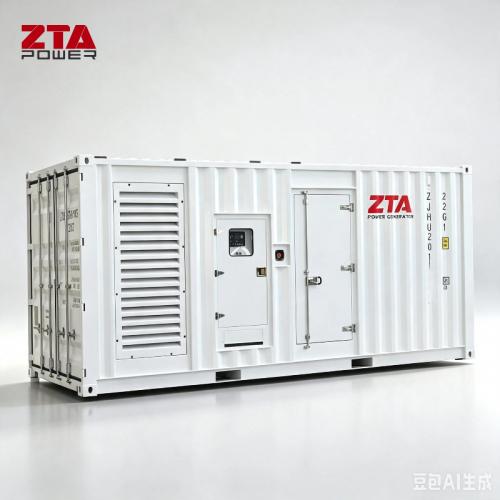
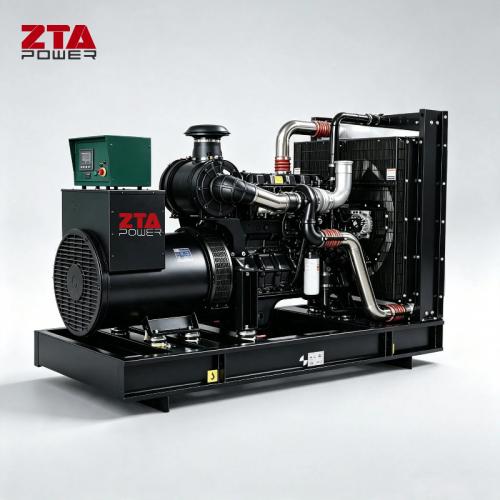
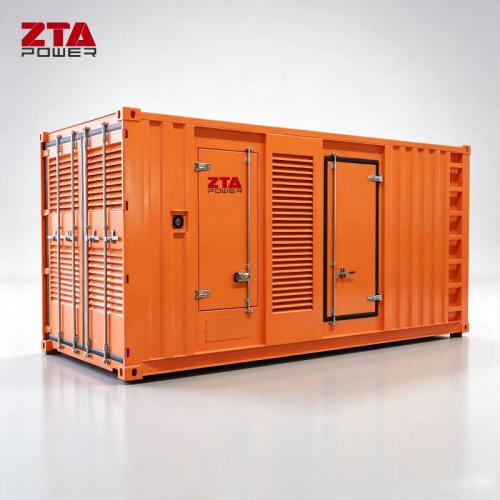
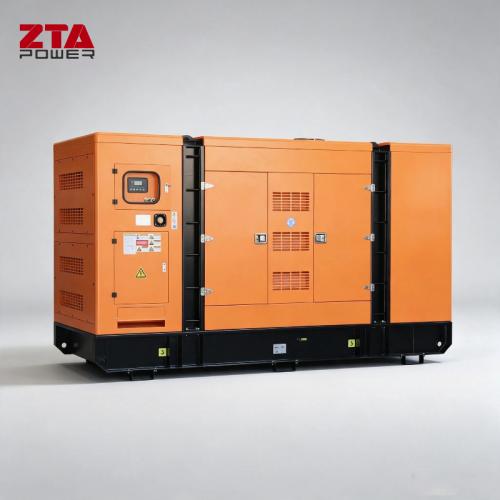
ZTA Power builds prime-rated and continuous-rated diesel generator sets configured specifically for manufacturing and process plants:
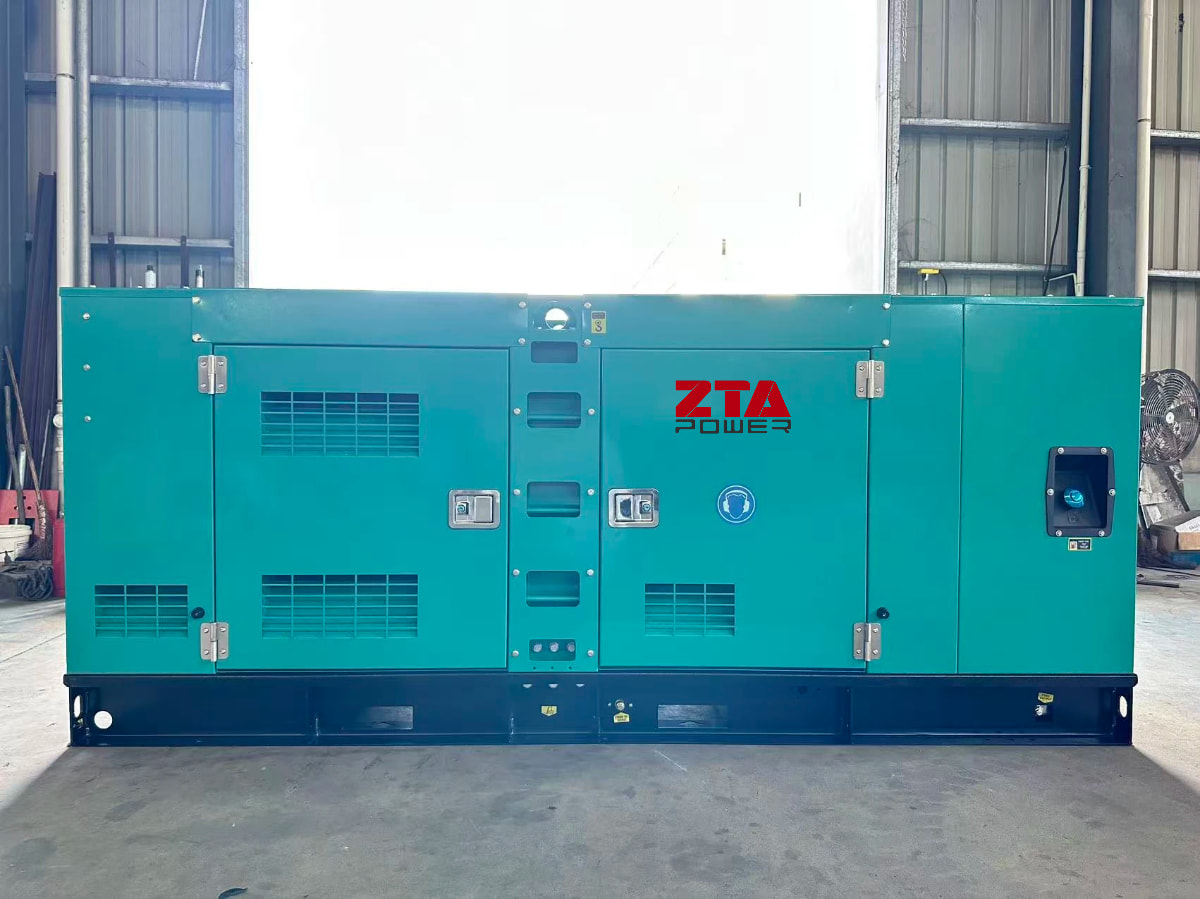
Send us your plant load schedule and our technical team will size the system against your real operating profile — not an assumed maximum. Contact us to discuss your project.

 IPv6 network supported
 English
 français
 русский
 español
 português
 العربية
 Türkçe
 ไทย
ไทย Tiếng Việt
 Indonesia
  Filipino