Why Mining Companies Choose Heavy Duty Diesel Generators for Off-Grid Mine Site Power
POWER INSIGHTS | October 2026 | ZTA Power Technical Team | 7 min read
Why Mining Companies Choose Heavy Duty Diesel Generators for Off-Grid Mine Site Power
Quick Answer
|
Mining companies choose heavy duty diesel generators because no other power source combines MW-scale output, 24/7 prime power, fast deployment and full fuel independence on a site with no grid. A mine typically specifies a prime-rated mine site generator at 2,000–8,000 kW, built as an N+1 paralleled power station of 1,500–2,500 kVA modular units, with alternators selected for motor starting kVA and engines derated for altitude, ambient heat and dust. The deciding factors are rarely purchase price — they are uptime per hour, fuel burn per kWh, and mean time between failures. Rule of thumb: size to continuous load + 25–30% reserve, then verify the largest motor start against a limit of 20% voltage dip. |
Key Takeaways
✔ Duty rating first: a prime power generator running 8,000+ hours a year is not a standby unit — mis-rating is the single most common and most expensive mining power error
✔ Motor starting, not running load, defines the alternator: crushers and mills pull 400–700% of running current for a few seconds and can collapse an undersized genset
✔ Redundancy is production insurance: N+1 parallel configuration keeps the plant crushing during engine service instead of stopping the mill
✔ Fuel is 60–80% of lifetime cost: run between 70–80% of rated load to hold specific fuel consumption near 0.20–0.25 L/kWh
✔ Altitude, heat and dust stack: at 2,500–4,200 m expect 12–30% output loss — order altitude-corrected ratings in writing
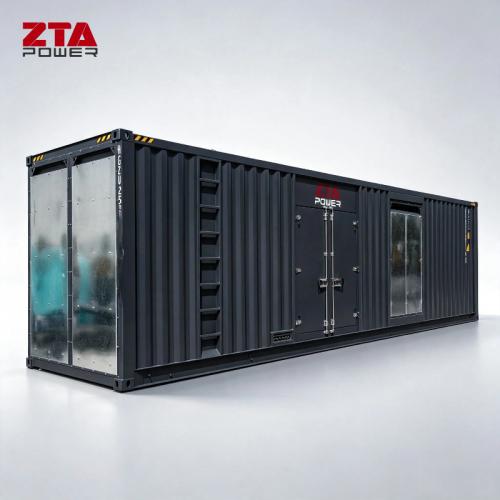
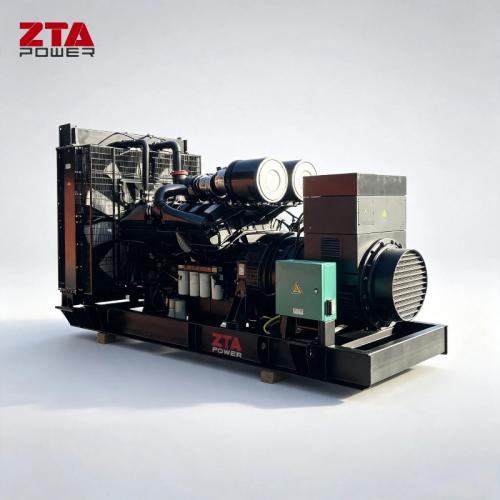
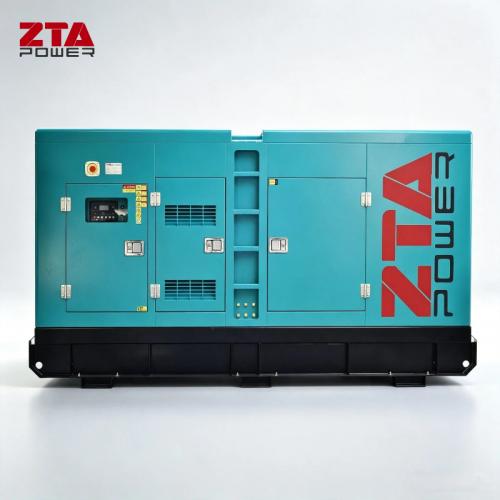
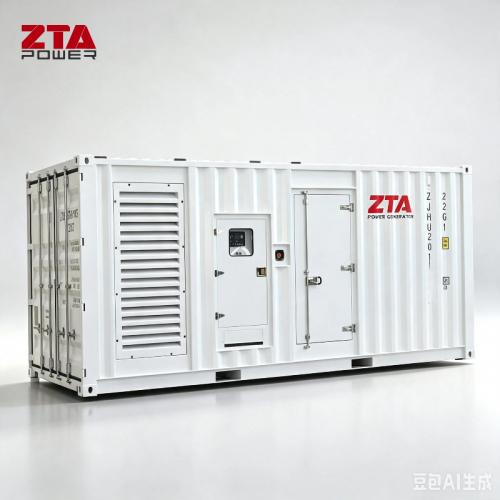
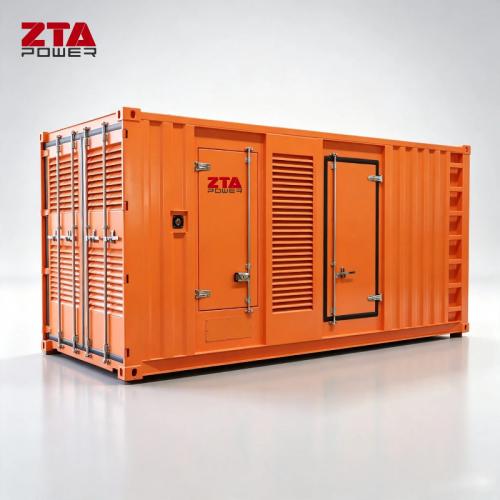
✔ Containerized diesel generator modules cut civil works and commissioning time — the fastest route to first ore
✔ Monitoring closes the loop: remote load sharing and load shedding logic prevents cascade trips when a mill starts
Why Diesel Still Wins at the Mine Gate
Every mining feasibility study eventually reaches the same question: what keeps the plant running when the nearest substation is 300 km away and the road in is seasonal?
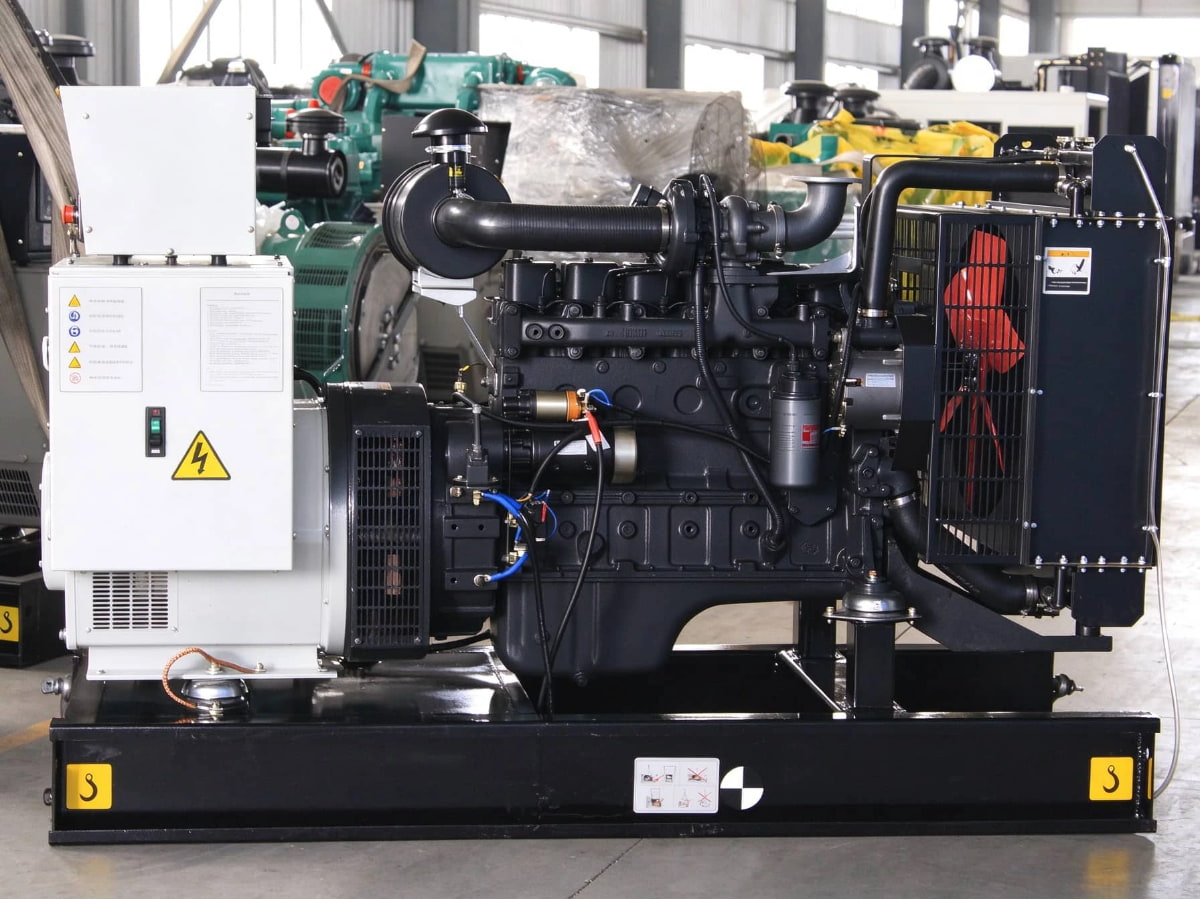
Solar and battery hybrid plants cut daytime fuel burn, and the best mine microgrids in Africa and Latin America now pair PV with storage. But the heavy duty diesel generator remains the anchor: it is dispatchable on demand, indifferent to weather, fuel can be stockpiled on site, and it delivers megawatt-scale output from a footprint of a few container bays. Mining procurement teams therefore treat the diesel power station as production infrastructure, not as emergency equipment — and they specify it accordingly.
Four load families run simultaneously at a mine, and they behave completely differently:
|
Mine Load Family |
Typical Rating |
Behaviour on the Genset |
|
Crushing, conveying & milling |
100–800 kW per crusher; 500–3,000 kW per mill |
Heavy starting surge, high continuous base |
|
Underground ventilation & dewatering |
up to ~1,100 kW per primary fan |
25–50% of total mine energy, must never stop |
|
Process plant & heap-leach pumping |
500 kW–5 MW |
Flat 24-hour profile, step changes |
|
Camp, workshop & site services |
50–300 kW per camp |
Low but non-negotiable; life-safety load |
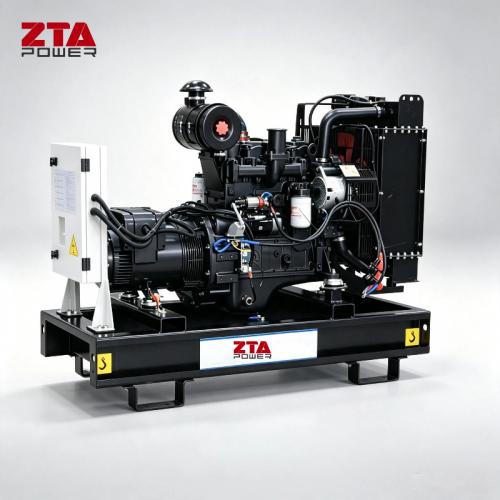
That mix is why a generic industrial diesel generator catalogue unit underperforms on site. Mining duty demands heavier engine structures, oversized radiators, two-stage air filtration and alternators with low subtransient reactance — the four specifications that separate a heavy duty set from a commercial one.
The Five Specifications That Actually Decide Uptime
▪ 1. Duty rating — prime, not standby. A mine that runs 8,000 hours a year must buy prime power. Per ISO 8528, a prime-rated heavy duty diesel generator carries its rated load indefinitely with 10% overload for 1 hour in 12; a standby unit is limited to roughly 200 hours a year and voids warranty under continuous duty. Buying standby to save 15–25% on capital is the most expensive saving in the industry.
▪ 2. Motor starting capability, expressed as kVA. Running load tells you the engine size; starting surge tells you the alternator. Direct-on-line crusher and mill motors draw 4–7× running current for 5–15 seconds. Specify the largest single motor and its starting method on the enquiry — DOL, soft starter or VFD changes both module count and alternator frame. Adding a soft starter frequently removes one whole genset from the design.
▪ 3. Paralleling and load sharing. Multi-unit parallel generator banks are the mine-site standard above 1 MW: staged starting spreads inrush across the whole bank, spinning reserve absorbs a mill start, and one module can be serviced while the plant keeps running. Insist on open protocols — Modbus TCP, CAN J1939, SNMP — so the bank reports into site SCADA.
▪ 4. Site derating, documented. Nameplate figures assume sea level and 25–40°C. At altitude and in a hot pit, output drops in stacks: roughly 3–4% per 300 m above 1,000 m, about 1% per 5°C above rated ambient, plus 2–5% for dust loading on the radiator. A 1,250 kVA unit at 4,200 m and 45°C delivers closer to 960 kVA — a 23% shortfall discovered only if the curve is requested before the order.
▪ 5. Fuel system engineered for logistics. At a remote site the tank is a supply-chain decision. Plan 7–14 days of autonomy at expected average load, specify fuel polishing and water separation, and require metered consumption data — because delivered diesel, not generator efficiency, is what sets the cost per kWh.
Matching the Power Architecture to the Mine
|
Mine Type |
Continuous Load |
Recommended Configuration |
Duty Rating |
|
Exploration / fly camp |
50–200 kW |
80–250 kVA mobile or trailer-mounted |
Prime |
|
Small surface mine |
200–500 kW |
300–650 kVA single containerized unit |
Prime |
|
Mid-size underground |
500–1,500 kW |
650–2,000 kVA, 2–3 units paralleled |
Prime |
|
Large open pit / concentrator |
2,000–8,000 kW |
4–6 × 1,500–2,500 kVA, N+1 parallel |
Prime |
|
Major operation |
8,000–30,000 kW |
Multi-MW station, MV distribution, hybrid-ready |
Prime |
Add 20–30% reserve margin to every line above. Mines are not static loads: a site commissioned at 1,200 kW is routinely running 1,800 kW within three years, and retrofitting capacity later costs 30–50% more than including it at design stage.
Real-World Case: Right-Sizing a 2,000 kW Gold Plant at Altitude
A gold processing client in the East African highlands asked for a quote against a running load of 1,400 kW, site elevation 2,600 m, ambient up to 38°C, and one dominant load: a 355 kW ball mill on direct-on-line starting. Their original plan was a single 2,000 kVA open-type set.
▪ Step 1 — Running load: 1,400 kW ÷ 0.8 PF = 1,750 kVA base demand, before any margin.
▪ Step 2 — Largest motor: 355 kW mill at 6× DOL ≈ 2,130 kVA of starting kVA — larger than the proposed generator's entire rating.
▪ Step 3 — Derating: At 2,600 m the 2,000 kVA unit would deliver roughly 1,700 kVA — below the base demand it was bought to serve.
▪ Step 4 — Recommendation: three 1,250 kVA containerized modules in parallel (two running, one standby) with a soft starter on the mill, cutting starting surge to about 1.5×.
Outcome: the station holds 70–78% load on the running sets, the third module absorbs a mill restart and covers scheduled service, and fuel metering shows specific consumption in the 0.21–0.24 L/kWh band instead of the 0.30+ L/kWh the single oversized-then-derated unit would have produced at low load. The client's own summary was blunt: the parallel bank cost more on the purchase order and less on the operating budget.
Three Mistakes That Stop a Mill
Buying standby for prime duty. Continuous operation on a standby-rated engine accelerates wear, dilutes lube oil at low load and voids the manufacturer's warranty. The saving is 15–25% of capital; the cost is a replacement unit inside two years.
Sizing on running kW only. A generator that carries the base load but stalls on the largest motor start is not undersized on paper — it is undersized on transients. Always check voltage dip at the moment of starting, and keep it inside 20%.
Forgetting dust and airflow. A radiator packed with silica dust loses capacity within weeks in an open pit. Two-stage filtration, pre-cleaners and a service interval written into the contract protect the derating assumption you paid for.
Frequently Asked Questions
Q: What size heavy duty diesel generator does a mine need?
A: Size to total continuous load plus 20–30% reserve, then verify the largest motor start and apply altitude and temperature derating. Typical bands: 300–650 kVA for a small surface mine, 650–2,000 kVA for mid-size underground, and multiple 1,500–2,500 kVA units in parallel for open-pit operations above 2,000 kW.
Q: Prime power or standby — which rating for a mine site?
A: Prime. Mine sites without a reliable grid run thousands of hours per year, which is continuous duty under ISO 8528. Standby-rated sets are limited to about 200 hours per year and cannot be used as the primary source without voiding warranty.
Q: Why use several paralleled generators instead of one large unit?
A: Redundancy, motor starting and efficiency. A parallel bank shares inrush across all modules, keeps N+1 coverage during service, and lets you run sets in their 70–80% efficiency band as load grows — where a single oversized unit would run below 30% and wet-stack.
Q: How much output is lost at high altitude?
A: Roughly 3–4% per 300 m above 1,000 m for turbocharged engines, plus about 1% per 5°C above rated ambient and 2–5% for dust. At 4,200 m and 45°C, a 1,250 kVA set may deliver only around 960 kVA. Always request the manufacturer's derating curve in writing.
Q: Can diesel generators run alongside solar and battery storage?
A: Yes, and it is now common practice. Hybrid microgrids let PV and batteries carry daytime load while diesel covers night, cloud cover and peak demand — typically cutting generator run-hours 30–60% and fuel spend proportionally, without giving up dispatchable backup.
Q: What fuel autonomy should the site tank provide?
A: Plan 7–14 days at expected average load, not at nameplate rating. A 1 MW station near 75% load burns roughly 160–190 L/h, so a week of cover means substantial storage plus ullage, fuel polishing and water separation.
|
Planning Power for a Mine Site? Send your load list, largest motor and starting method, site altitude and ambient temperature — ZTA Power's engineers will return a derated, motor-start-checked configuration within 24 hours. ✉ nancy@ztapower.com |

 IPv6 network supported
 English
 français
 русский
 español
 português
 العربية
 Türkçe
 ไทย
 Tiếng Việt
 Indonesia
 Filipino